Tankless Water Heaters in Denver & Aurora: The Complete On-Demand Hot Water Guide (2026)
A tankless water heater — also called an on-demand water heater — heats water only when you open a tap, instead of keeping 40–75 gallons hot around the clock. No storage tank, no standby heat loss, no running out of hot water halfway through the second shower. They've gone from novelty to mainstream in the Denver metro, and with Colorado's 2026 efficiency regulations narrowing the field of available gas tank models, more homeowners than ever are asking us whether it's time to switch.
This guide covers everything we get asked about tankless systems in Denver and Aurora: how they work, what they really cost to install in 2026, how to size one at our altitude, and the one local factor — hard water — that decides whether your investment lasts 20 years or dies young.
How an On-Demand Water Heater Actually Works
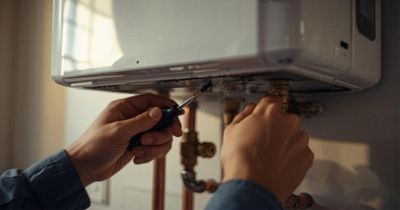
When you open a hot tap, a flow sensor inside the unit detects moving water and fires a gas burner (or electric element) under a heat exchanger. Cold water snakes through the exchanger's narrow passages, picks up heat, and arrives at your fixture hot — typically within a few seconds of ignition. Close the tap, and the unit shuts off completely.
That's the whole trick: you heat water only while you're using it. A tank heater, by contrast, reheats the same stored water all day and night whether you're home or not. That standby loss is why switching to tankless typically trims water-heating energy use by 20–30%.
What Tankless Gets You
Endless hot water. Within its flow-rate limits, a properly sized tankless unit never "runs out." Back-to-back showers, a filling tub, and a running dishwasher stop being a scheduling negotiation.
A 20+ year lifespan. Quality tankless units last roughly twice as long as a tank — 20+ years versus 8–12 — and most components are repairable rather than throwaway.
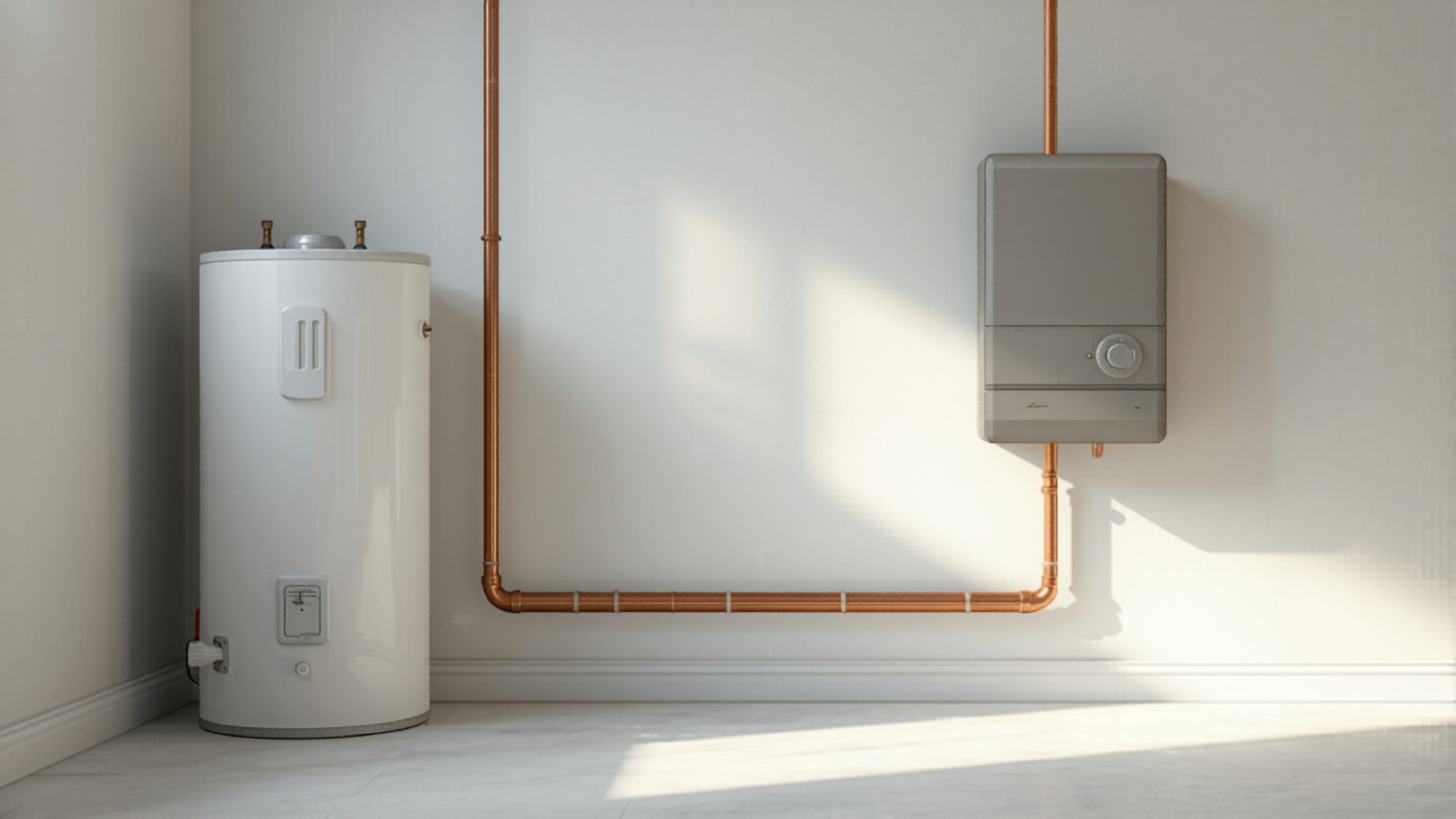
Space back. A wall-mounted unit the size of a carry-on suitcase replaces a floor-standing tank. In Denver's older homes with tight mechanical rooms, that's a real bonus.
Lower gas bills. The 20–30% efficiency gain shows up every month, and it compounds over a 20-year service life.
No 50-gallon flood risk. Tanks fail by leaking — sometimes catastrophically. A tankless unit has no stored water to dump into your basement.
What They Honestly Cost in Denver & Aurora (2026)
Here's where we'll be more direct than the teaser prices you'll see online. The number that matters is what a complete, code-compliant installation costs in this market:
- First-time conversion (tank to tankless): $6,500 – $8,500. Converting a Denver or Aurora home usually means upsizing the gas line, running new stainless or PVC direct venting, and adding condensate drainage. That infrastructure is most of the price — and it's what the low online quotes quietly leave out.
- Replacing an existing tankless unit: $3,500 – $4,000. If your home already has the gas, venting, and drain in place, swapping an aging unit for a new one is a much smaller job.
- Sticking with a tank instead: from $2,900 for a standard tank water heater replacement.
Why the spread on conversions? Three variables: how far your gas meter and line are from adequate capacity, how cleanly a vent path can be routed, and where condensate can legally drain. We give you an exact written price after evaluating all three — before any work begins — and financing is available.
Still weighing tank versus tankless? Our 2026 tank vs. tankless cost comparison walks through the break-even math in detail.
Sizing for Colorado: Altitude and Groundwater Matter
Two local factors trip up out-of-the-box sizing calculators:
- Altitude. Gas appliances lose combustion capacity as elevation rises, and at Denver's 5,280+ feet a tankless unit delivers less than its sea-level rating. An installer who doesn't derate for altitude leaves you with lukewarm winter showers.
- Cold groundwater. In January, incoming water in the Denver metro can be decades colder than in the Sun Belt markets most sizing charts assume. The colder the inlet, the more temperature rise the unit must produce, and the fewer simultaneous fixtures it can serve.
The practical takeaway: the model that's right for a house in Phoenix is often a size too small here. We size for your actual winter conditions and simultaneous demand — showers, laundry, dishwasher — so the system performs in February, not just at the summer install.
The Denver-Metro Dealbreaker: Hard Water
This is the section most tankless sales pages skip, and it's the most important one for our area.
Denver and Aurora water is hard, and hard water is the number-one killer of tankless water heaters. The same narrow heat-exchanger passages that make on-demand heating efficient are exactly where mineral scale builds up. Scale chokes flow, triggers error codes, drags efficiency below rated levels, and can cut the lifespan of a $6,500+ system down to tank-heater territory — sometimes voiding the manufacturer's warranty along the way.
That's why we recommend pairing every tankless installation with a whole-house water filtration system. Filtration protects the heat exchanger from scale, keeps the unit at its rated efficiency, dramatically stretches the interval between descaling services, and protects every other fixture and appliance in the house as a side benefit.
If you want the full picture on what our water does to plumbing, see our hard water solutions guide and the Denver Hard Water Guide: 2026 Homeowner's Resource.
Maintenance: What a Tankless Unit Asks of You
Not much — but not nothing. Plan on a periodic descaling flush (annually in unfiltered hard-water homes; far less often with whole-house filtration), plus an occasional inlet-screen cleaning. That small routine is what turns the 20-year lifespan from a brochure claim into reality. We service and repair all major tankless brands across Denver and Aurora, including units we didn't install.
Is Tankless Right for Your Home?
Tankless is usually the right call if: you're staying in your home 8+ years, you regularly run out of hot water, you're already opening up gas or venting for other work, or your mechanical space is tight.
A tank still makes sense if: your budget is fixed at replacement time, your household is small and never outruns the tank, or your home's gas and venting would need unusually expensive upgrades.
And with Colorado's 2026 water heater regulations limiting available gas tank models, plenty of homeowners are treating a failing tank as the natural moment to make the switch — you're buying a new system either way.
Get a Real Number for Your Home
Online ranges are a starting point; your gas line, vent path, water hardness, and winter demand set the real price. Mr Perfect Plumbing installs tankless water heater systems across Denver and Aurora — new conversions $6,500–$8,500, existing tankless replacements $3,500–$4,000 — plus the whole-house filtration that protects them, with a written price before any work begins and financing available.
Call 720-767-0319 for an honest evaluation. If tankless isn't right for your home, we'll tell you that too.