Tank vs. Tankless Water Heater: 2026 Cost Comparison for Denver & Aurora Homes
If your water heater is 8-12 years old, you're facing the question sooner or later: replace it with another tank, or upgrade to tankless? With Colorado's 2026 water heater regulations now limiting available gas tank models, more Denver and Aurora homeowners are weighing the switch than ever. Here's an honest comparison - costs, savings, and who each system actually suits.
The Short Answer
A standard tank replacement is cheaper today; a tankless system costs more upfront - realistically $6,000-$7,000 for a first-time conversion in the Denver-Aurora area - but lasts about twice as long and trims energy bills 20-30%. The break-even point typically lands around year 8-10. And in our hard-water region, a tankless unit should be paired with whole-house filtration to actually reach that 20-year lifespan - more on that below.
Upfront Cost: What You'll Actually Pay in 2026
- Installed cost: Tank - from $2,900 at Mr Perfect Plumbing. Tankless - new install (converting from tank): $6,000-$7,000; replacing an existing tankless unit: $3,500-$4,000.
- Equipment lifespan: Tank 8-12 years; tankless 20+ years.
- Energy savings: Tankless trims energy bills 20-30% vs. an older tank.
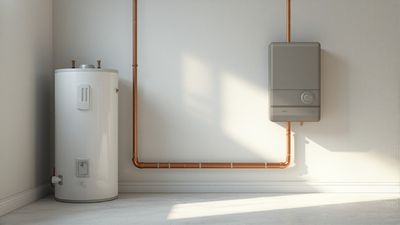
- Hot water supply: Tank holds 40-75 gallons, then you wait for recovery; tankless is continuous within its flow-rate limits.
- Space: Tank needs a floor footprint; tankless mounts compactly on the wall.
The big price difference on tankless is whether your home already has one: a first-time conversion from a tank requires gas line upsizing, new venting, and condensate drainage - that's why new installs realistically land in the $6,000-$7,000 range, not the teaser prices you may see online. If you're replacing an existing tankless unit, that infrastructure is already in place, and the job typically runs $3,500-$4,000. Either way, you'll get an exact written price before any work begins.
Why Tankless Costs More to Install
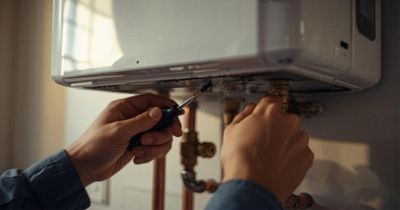
A tankless unit isn't a plug-and-play swap. Most cost variation comes from three things:
- Gas supply. Tankless heaters demand more gas at once. Many Denver and Aurora homes need a gas line upsize.
- Venting. Direct-vent stainless or PVC venting must be routed correctly - especially important at Colorado altitude.
- Condensate management. High-efficiency condensing units need a proper drain.
If your home already has adequate gas capacity and a good venting path, you'll land at the lower end of the range.
The Lifespan Math
Replace a tank at year 10, and you'll likely buy another before a tankless neighbor replaces theirs once. Two tanks plus the energy difference over 20 years often exceeds the single tankless investment - but only if the system is sized and installed correctly. An undersized tankless unit that error-codes every winter saves nobody money.
Colorado's 2026 Regulations Change the Picture
New state efficiency regulations significantly limit available gas tank water heater models in Colorado, pushing equipment costs up and narrowing choices. That makes two paths sensible in 2026: replace like-for-like soon while proven tank models remain available, or use the forced decision as the moment to upgrade to tankless, since you're paying for a new system either way.
We covered the regulation details in our earlier article on the 2026 water heater rules.
Which One Is Right for Your Home?
A tank is usually right if: your budget is fixed, your household is small, your current setup works fine, or your home's gas/venting would need expensive upgrades for tankless.
Tankless is usually right if: you're staying in the home 8+ years, run out of hot water regularly, value the space savings, or are already upgrading gas/venting for other work.
Installing Tankless in Denver or Aurora? Plan for Filtration
Here's the part most tankless quotes leave out: our water is hard, and hard water is the number-one killer of tankless water heaters. Scale builds up inside the unit's narrow heat exchanger passages, choking flow, triggering error codes, and cutting the lifespan of a $6,000+ investment down to tank-heater territory - sometimes voiding the manufacturer warranty along the way.
That's why we strongly recommend pairing any tankless installation with a whole-house water filtration system. Filtration protects the heat exchanger from scale, keeps efficiency at rated levels, dramatically reduces descaling maintenance, and protects every other fixture and appliance in the house as a bonus.
If you want to understand what Denver-metro hard water is doing to your plumbing right now, see our hard water solutions guide and the Denver Hard Water Guide: 2026 Homeowner's Resource.
When we quote a tankless conversion, we'll evaluate your water hardness and show you the filtration options alongside the heater itself - so the system you buy lasts the 20+ years it's supposed to.
Get a Real Number, Not a Guess
Online ranges are a starting point - your gas line, venting, water hardness, and household demand decide the real price. Mr Perfect Plumbing installs traditional water heaters (from $2,900), tankless systems (new conversions $6,000-$7,000; existing tankless replacements $3,500-$4,000), and the whole-house filtration that protects them - across Denver and Aurora, with written estimates before work begins and financing available.
Call 720-767-0319 for an honest evaluation - we'll tell you if tankless isn't right for your home, too.