


Trenchless Sewer Installation in Denver, CO
Garbage disposal installation service in Denver, CO, featuring a kitchen sink and faucet.

Locally owned and operated

24/7 Phone Answering & Online Booking

20+ years of experience

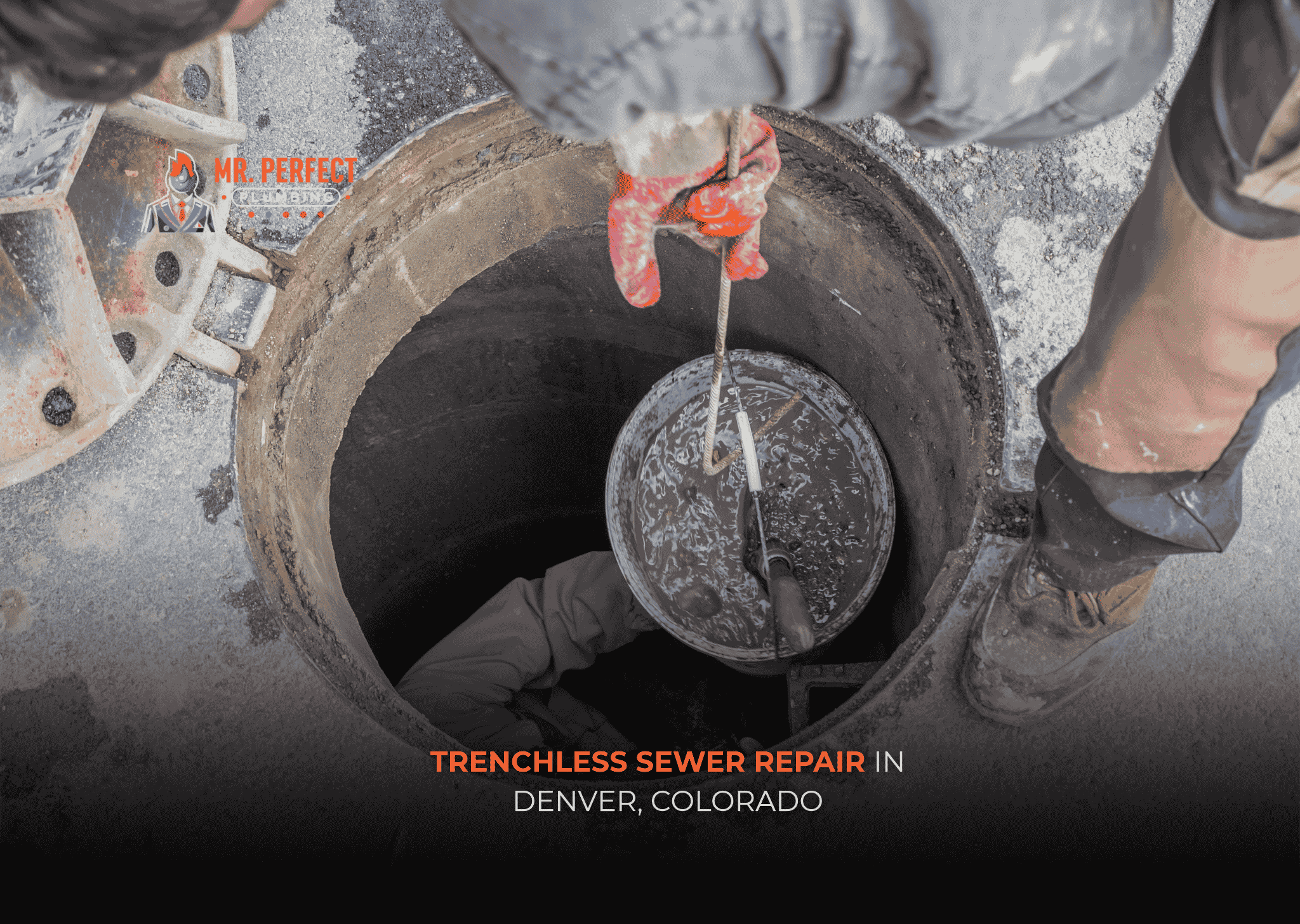
Replacing a sewer line used to mean accepting the trade-off: a functioning sewer system in exchange for a torn-up yard, a damaged driveway, and days of construction. That trade-off isn't necessary anymore. At Mr. Perfect Plumbing, we've provided trenchless sewer installation in Denver, CO for homeowners throughout the metro area for more than 20 years, giving you a brand-new sewer line with a fraction of the digging traditional installation requires.
What Is Trenchless Sewer Installation?
How Trenchless Sewer Installation Works
We start every installation project with a camera inspection (if a line already exists) and a site assessment to confirm trenchless is a good fit for your property. From there, the process generally follows these steps:
- Access pit excavation. Instead of digging along the entire pipe route, our team digs two small pits — one at each end of the pipe run.
- Pipe bursting or guided boring. For replacements, a bursting head is pulled through the old pipe, fracturing it outward while simultaneously pulling the new pipe into place. For new routes without an existing pipe, directional boring creates a path for the new line underground.
- Connection to the home and municipal main. The new line is connected to your home's plumbing on one end and tied into the municipal sewer main on the other, following city permitting and inspection requirements.
- Testing and inspection. Once installed, the new line is tested for proper flow and inspected to confirm it meets code before the access pits are backfilled.
- Backfill and restoration. Because only the two access pits need to be filled and restored, your yard, driveway, or landscaping is left largely intact compared to a full-trench installation.
-
Trenchless vs. Traditional Sewer Line Installation
- Trenchless installation uses pipe bursting or directional boring to install a new line through one or two access points. It's typically faster, less disruptive, and better suited to properties with mature landscaping, established driveways, or limited yard access.
- Traditional trench installation requires digging a continuous trench along the entire pipe path. It's sometimes the only option for significantly rerouted lines, major upsizing, or sites where soil conditions or utility conflicts make trenchless methods impractical.
We'll assess your property and walk you through both options honestly — recommending trenchless whenever it's a safe, code-compliant fit, and traditional excavation when it genuinely is the better choice.
When Trenchless Sewer Installation Makes Sense
Trenchless installation is a strong option in situations like:
Full sewer line replacement
when an old clay, cast-iron, or Orangeburg line has deteriorated beyond repair.
Septic-to-sewer conversion
where a new line needs to be run from the home to the municipal main.
Properties with mature landscaping
established trees, gardens, or lawns that a full trench would destroy.
Homes with driveways, patios, or walkways
sitting directly over the pipe path.
Properties with limited equipment access
such as narrow side yards or tight urban lots common in Denver's older neighborhoods.
Trenchless methods aren't the right fit for every project — significant rerouting, major depth changes, or certain soil and utility conflicts may still call for traditional excavation. A site assessment is the only way to know for sure, and that's always our starting point.

Benefits of Trenchless Sewer Installation
- Minimal disruption to your property. Two small access pits replace what would otherwise be a full-length trench.
- Faster project completion. Trenchless installation is typically completed in significantly less time than traditional trenching.
- Lower restoration costs. Less excavation means less landscaping, concrete, or hardscape repair afterward.
- Durable, long-lasting pipe. New trenchless pipe is resistant to root intrusion, corrosion, and the buildup that shortens the life of older pipe materials.
- Less disruption to daily life. Water service interruptions are typically brief, so your household isn't out of commission for long.
Trenchless Sewer Installation Cost in Denver, CO
Trenchless installation cost depends on the length of the run, pipe depth, soil conditions, permitting requirements, and whether the project is a straightforward replacement or a new septic-to-sewer connection. In many cases, trenchless installation costs less overall than traditional trenching once landscaping and hardscape restoration are factored in — but every property is different. We provide an on-site assessment and clear, upfront pricing before any work begins, with financing available through Wisetack for qualifying projects.
Why Choose Mr. Perfect Plumbing for Trenchless Sewer Installation in Denver, CO
- 20+ years of experience installing and replacing sewer lines throughout the Denver metro area.
- Licensed and insured team, holding a Master Plumber License and Colorado Plumbing License.
- BBB A Rating, reflecting our long-standing commitment to quality work and clear communication.
- Camera inspections and site assessments before every project to confirm trenchless is the right fit.
- Both trenchless and traditional installation options, matched honestly to your property's needs.
- Permitting and code compliance handled for you, from municipal tap connection through final inspection.
- Upfront pricing and financing options available through Wisetack.
- 24/7 emergency availability for urgent sewer line failures that can't wait.
Schedule Your Trenchless Sewer Installation in Denver, CO Today
A new sewer line doesn't have to mean a torn-up yard. Whether you're replacing a failing line, converting from septic to sewer, or protecting mature landscaping you don't want disturbed, Mr. Perfect Plumbing can help you get it done right. Call us today at 720-767-0319 or request a free estimate online to schedule a site assessment with our licensed Denver plumbing team.
FAQs
Frequently Asked Questions
How long does trenchless sewer installation take?
Most residential trenchless sewer installations are completed within one to a few days, depending on the length of the pipe run and site conditions. This is considerably faster than traditional trench installation, which can take a week or longer once digging, backfilling, and landscaping restoration are included.
Does trenchless installation work for brand-new sewer lines, not just replacements?
Trenchless methods are most commonly used to replace an existing damaged line, since pipe bursting relies on pulling a new pipe through the path of the old one. For entirely new routes — such as a septic-to-sewer conversion or a line that needs to be rerouted — directional boring can sometimes be used instead, though a site assessment is needed to confirm it's feasible for your property's soil and layout.
Is trenchless sewer installation more expensive than traditional installation?
The upfront cost of trenchless installation can be comparable to or higher than traditional trenching on a per-foot basis, but it often costs less overall once you factor in the savings from not having to repair landscaping, driveways, or hardscaping afterward. Getting an accurate comparison for your property requires an on-site assessment, since costs vary based on pipe length, depth, and site conditions.
Testimonials
Real Customer Reviews
Book a service
Schedule Your Trenchless Sewer InstallationTrenchless Sewer Repair Today