


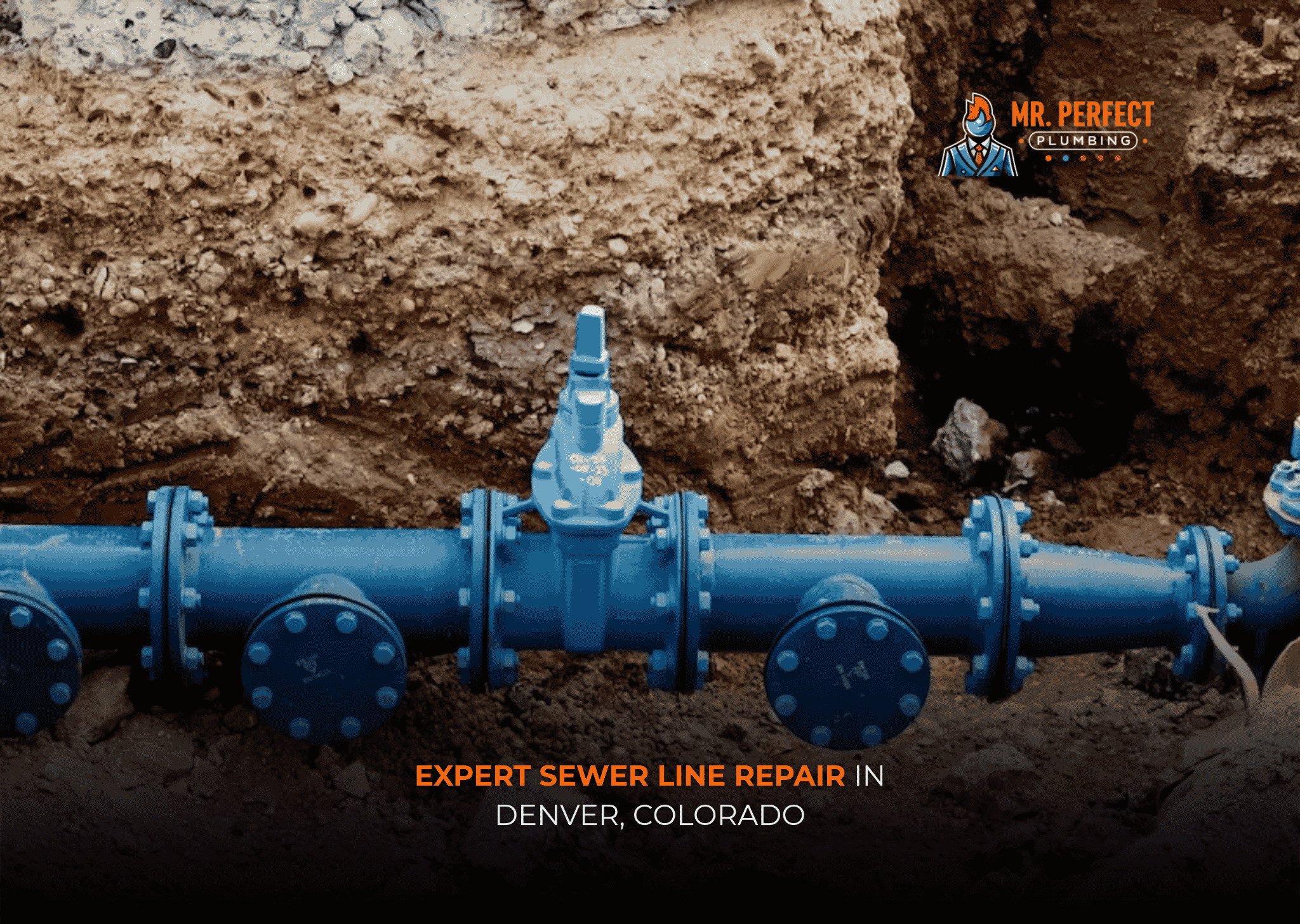
Expert Sewer Line Repair in Denver, Colorado
Garbage disposal installation service in Denver, CO, featuring a kitchen sink and faucet.

Locally owned and operated

24/7 Phone Answering & Online Booking

20+ years of experience
A slow drain is annoying. A sewage backup in your basement is a crisis. If water is bubbling up through your floor drain, your yard has a soggy patch that never dries out, or every fixture in the house is backing up at once, you're not looking at a simple clog — you're likely looking at a damaged sewer line. At Mr. Perfect Plumbing, we've spent more than 20 years diagnosing and repairing sewer lines throughout the Denver metro area, and we know how stressful this problem feels when it shows up in your home. This guide walks through the warning signs, the causes, and the repair options available for sewer line repair in Denver, CO — so you know exactly what you're dealing with and what to do next.
What Is Sewer Line Repair?
Signs You Need Sewer Line Repair in Denver, CO
Sewer lines are buried, so damage often goes unnoticed until it becomes a bigger problem. Watch for these warning signs:
Multiple slow or backed-up drains at once
If your kitchen sink, bathtub, and toilet are all draining slowly or backing up on the same day, the issue is likely in the main sewer line, not an isolated fixture.
Gurgling sounds from toilets or drains
Air trapped in a blocked or damaged line often escapes as a gurgling noise when you run water elsewhere in the house.
Sewage odors indoors or in the yard
A persistent rotten-egg or sewage smell near your foundation, crawl space, or yard usually points to a leak or crack in the line.
Unusually green, lush patches of grass
A section of lawn that's noticeably greener than the rest — even during dry spells — can mean a leaking sewer line is fertilizing the soil above it.
Soggy ground, sinkholes, or foundation cracking.
Saturated soil from a leaking line can erode the ground beneath a driveway, sidewalk, or foundation over time.
Sewage backup in the lowest drain of the house
Basement floor drains and lower-level bathrooms are usually the first to back up because they sit at the lowest point in the plumbing system.
Frequent clogs despite regular drain cleaning
If drain cleaning only provides temporary relief and clogs keep returning, the pipe itself may be cracked, collapsed, or blocked by roots.

Common Causes of Sewer Line Damage in Denver
Understanding what causes sewer line failure helps explain why repairs are needed and how to prevent them in the future.
- Tree root intrusion. Tree roots are drawn to the moisture and nutrients inside sewer pipes. They can work their way into small cracks or joints and expand until they crack or fully block the pipe — one of the most common causes we see across Denver's older, tree-lined neighborhoods.
- Aging or corroded pipe materials. Many homes built decades ago still have original clay, cast-iron, or Orangeburg (tar paper) sewer pipes. These materials corrode, crack, and deteriorate with age, especially once they pass the 50-plus-year mark.
- Ground shifting and soil movement. Denver's clay-heavy soil expands and contracts with moisture changes, which puts pressure on buried pipes and can cause them to shift, crack, or collapse over time.
- Bellied or sagging pipe sections. A section of pipe can sink due to soil settling, creating a low spot ("belly") where waste and debris collect instead of flowing through.
- Grease, debris, and foreign object buildup. Cooking grease, wipes, and other non-flushable items can accumulate inside the line and, combined with existing damage, lead to a full blockage.
- Bellied joints and misaligned pipe connections. Older joint materials can separate over time, allowing soil and roots to enter the line at the connection points.
Sewer Line Repair Methods We Use in Denver, CO
Not every sewer line problem requires digging up your entire yard. We start with a camera inspection to pinpoint the exact location and cause of the damage, then recommend the least invasive method that will solve the problem for the long term.
Trenchless Sewer Repair
Trenchless sewer repair allows us to fix or replace a damaged pipe with minimal digging — often through a single small access point rather than a full-length trench. This method typically includes:
- Pipe lining (cured-in-place pipe): A resin-coated liner is inserted into the damaged pipe and cured in place, creating a new, seamless pipe within the old one.
- Pipe bursting: A new pipe is pulled through the old one, breaking apart the damaged pipe as it goes and replacing it in a single pass.
Trenchless methods are usually faster, less disruptive to your landscaping, and cost-competitive with traditional excavation for many types of damage.
Traditional Trench Repair
For pipes with severe collapse, significant bellying, or damage along multiple sections, traditional excavation may be the more reliable option. This involves digging down to the pipe, removing the damaged section, and replacing it with new pipe. While more invasive, it gives our team a direct view of the pipe and surrounding soil conditions, which matters when the damage is extensive.
Hydro Jetting for Sewer Lines
For blockages caused by grease buildup, scale, or heavy debris rather than a broken pipe, hydro jetting uses high-pressure water to clear the interior of the line and restore flow. It's often used as a maintenance step before or after a repair, and it's one of the services our team already provides as part of our broader drain services in Denver.
Sewer Line Repair Cost in Denver, CO
Sewer line repair cost depends heavily on the extent of the damage, the repair method needed, the depth of the pipe, and access to the affected area. Generally speaking:
- Localized trenchless repairs (lining a short section) tend to be the most cost-effective option when the damage is limited.
- Full trenchless replacement costs more than a spot repair but less than traditional excavation across a long pipe run.
- Traditional trench replacement is typically the most expensive option because of the excavation, landscaping restoration, and labor involved — but it may be necessary for severely collapsed or misaligned pipe.
Because every property and every sewer line is different, the only way to get an accurate number for your home is a camera inspection and an on-site estimate. We provide upfront pricing before any work begins, so you know what to expect with no surprises.
Why Choose Mr. Perfect Plumbing for Sewer Line Repair in Denver, CO
When it comes to your home's sewer line, experience and honesty matter. Here's what you can expect when you call us:
- 20+ years of experience diagnosing and repairing sewer lines throughout the Denver metro area.
- Licensed and insured team, holding a Master Plumber License and Colorado Plumbing License.
- BBB A Rating, reflecting our long-standing commitment to quality work and clear communication.
- Camera inspections to identify the exact cause and location of the problem before recommending a repair.
- Trenchless and traditional repair options, so you get the solution that fits your pipe's condition — not a one-size-fits-all fix.
- Upfront pricing and financing options available through Wisetack, so cost is never a surprise.
- 24/7 emergency availability, because sewer backups don't wait for business hours.
Schedule Your Sewer Line Repair in Denver, CO Today
A damaged sewer line only gets more expensive to fix the longer it's ignored. If you're seeing any of the warning signs above — slow drains, gurgling pipes, sewage odors, or a soggy patch of yard — don't wait for a full backup to call. Contact Mr. Perfect Plumbing today at 720-767-0319 or request a free estimate online to schedule a sewer line inspection with our licensed Denver plumbing team. We'll find the problem, explain your options in plain language, and get your sewer line flowing properly again.
FAQs
Frequently Asked Questions
Does a kitchen sink drain to a sewer line?
Yes. A kitchen sink's drain connects to your home's interior drainage system, which ties into the main sewer line before leaving the property and connecting to the municipal sewer main (or a septic system, in areas without municipal sewer service). If the main sewer line is blocked or damaged, a kitchen sink backing up is often one of the first signs homeowners notice.
What is the fall of a 4-inch sewer pipe?
Plumbing codes generally require a minimum slope, or "fall," of 1/4 inch per foot for a 4-inch sewer pipe, which allows wastewater and solids to flow by gravity without settling or causing blockages. Too little slope can cause waste to sit in the line, while too much slope can cause liquids to outrun solids, leaving debris behind. Getting the slope right is one of the reasons sewer line installation and repair should always be handled by a licensed plumber.
Can a toilet, shower, and sink share the same drain?
Yes, in most homes, toilets, showers, and sinks connect to shared branch drain lines that eventually feed into the same main sewer line leaving the house. Each fixture typically has its own trap and vent to prevent sewer gases from entering the home, but the wastewater ultimately travels through a common drainage system. This is exactly why a problem in the main line — a root intrusion or a collapsed section — can cause multiple fixtures to back up at the same time.
Testimonials
Real Customer Reviews